Hotel Thalassa
Cartes Postales from GreeceHotel Thalassa is the beachside hotel Stephanos Papazoglou built in Patras to compete for control of his father Apostolos Papazoglou’s hotel empire. Designed to make money quickly through a short tourist season and minimal building costs, it prospered at first; the same economy that improved its balance sheet, however, left the building unable to protect its guests. Its collapse in an earthquake killed thirty people and turned a family succession contest into a legal and financial catastrophe.
Origin and the inheritance contest
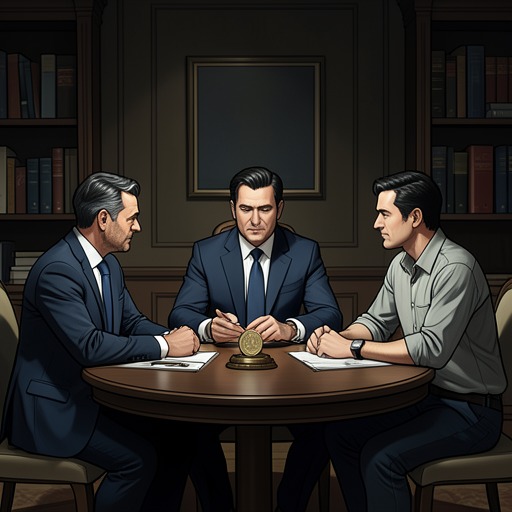
Hotel Thalassa began as one half of a test set by Apostolos Papazoglou to decide which of his sons would inherit his business. On his birthday, 13 October, he announced that he owned two undeveloped sites in Patras: one near the busy port and another on a stretch of sand. An old drachma coin would allocate the sites, and after two years he would compare the brothers’ balance sheets. The son whose business was ahead, even by ten drachmas, would take over the entire empire.
The coin gave the port site to the elder son, Manos Papazoglou, and the beach plot to Stephanos. The decision was made on the thirteenth, a date considered unlucky by the waiters who overheard the announcement. They connected the number to 1453, whose digits add to thirteen, and regarded the choice of date as an ominous mistake. This association would return after the hotels’ destruction, as Patras residents treated the date of their openings as a warning that had been ignored.
Design and opening
The beach site suited Stephanos, a keen swimmer, but the schedule was unforgiving. He had just over six months to build and equip the hotel before the beginning of the summer tourist season. He chose a plain, unadorned design: simple rooms, all facing the sea, following the model that had originally inspired his father.
Construction proceeded at record speed. The foundations were shallow and the walls consisted of little more than a single sheet of plywood. Stephanos kept spending on the build to a minimum, calculating that guests would spend most of their days on the beach and their evenings in a local bar rather than expecting the hotel itself to provide much. The low construction costs would improve the balance sheet he needed to show his father; they also meant that the structure lacked basic strength and safety provisions.
When Stephanos learned that Manos planned to open Hotel Pyrgos on 29 May, he arranged for Hotel Thalassa to open on the same day. The brothers held rival launch parties. Apostolos visited Hotel Pyrgos first, while his wife went to Hotel Thalassa, and the parents then exchanged locations. Both businesses initially appeared successful. Their father was impressed by the sons’ profit margins and, to their relief, did not examine more closely how those results had been achieved.
Seasonal success and hidden risk
Hotel Thalassa’s business model required only six months of operation each year. Its guests received relatively little from the hotel but spent freely at the beach bar, buying cold beer and fizzy drinks and paying high prices for water-skiing. A concentrated summer season and low building costs helped Stephanos show a strong return from the beach property. The hotel’s early commercial performance therefore concealed the disparity between apparent success and the quality of the building itself.
The contrast became decisive when the two businesses faced the earthquake. Hotel Pyrgos suffered a single cracked window; Hotel Thalassa, built with shallow foundations and substandard materials, could not withstand the movement. The comparison made the construction choices visible in the outcomes: what had seemed a saving in the competition between the brothers became a direct danger to the people staying at Stephanos’s hotel.
Earthquake and collapse
One warm June night, at about four in the morning, an earthquake struck while Hotel Thalassa’s guests were asleep. The quake measured 4.3 on the Richter scale. Although it was not considered a significant earthquake, the hotel’s floors shifted back and forth by several millimetres, jolting sleepers from their beds. There were no fire escapes or instructions telling guests what to do, and the building gave them no time to respond.
The floors failed in sequence: the fifth fell into the fourth, then the fourth into the third. Within minutes, the hotel collapsed into a heap of concrete, metal railings, beds, and bodies. Some exterior walls remained standing, but most of the floors disintegrated. Stephanos did not live at the hotel. Awakened by the earthquake, he ran down the road and found Hotel Thalassa already in ruins; his immediate response was to flee in the other direction.
More than two hundred guests had been staying in the hotel. Thirty were killed, and roughly a hundred people were wounded. The forensic investigation established that the building had been constructed without due regard for guest safety and that its components were substandard. The families of those killed, together with injured survivors, took Stephanos to court for negligence. The damage at Hotel Pyrgos—a cracked window—sharpened the difference between the two properties’ fates.
Verdict and lasting significance
The collapse brought the inheritance contest to an end in a form Apostolos had not anticipated. His sons were both facing trial, and the proceedings were due to begin in Athens on the day of his seventy-seventh birthday, which had been intended as his retirement and the transfer of the hotel empire. Seven months after the openings, on 29 May, verdicts of manslaughter were given in both cases. The date was the same as the brothers’ rival launch parties, giving the judgment a grim symmetry with the competition that had begun the disaster’s history.
The compensation owed to injured guests and bereaved families exceeded what the sale of the entire hotel empire could cover. Apostolos was forced to declare bankruptcy. Hotel Thalassa thus did more than fail as a building: its unsafe construction destroyed lives, implicated the family business in criminal proceedings, and helped bring down the wealth that the brothers had been competing to inherit.
For years, the crumbling remains of both hotels stood as reminders of the sack of Constantinople. Older residents of Patras continued to regard the opening date as a day that should not be forgotten, and the story presents the ruins alongside the local force of superstition and religious belief. Hotel Thalassa’s history consequently holds together two kinds of explanation: the ominous date remembered after the catastrophe, and the concrete decisions that made a relatively modest earthquake fatal. The inherited warning did not prevent the collapse; the hotel’s rushed construction and disregard for safety account for its human and financial consequences.